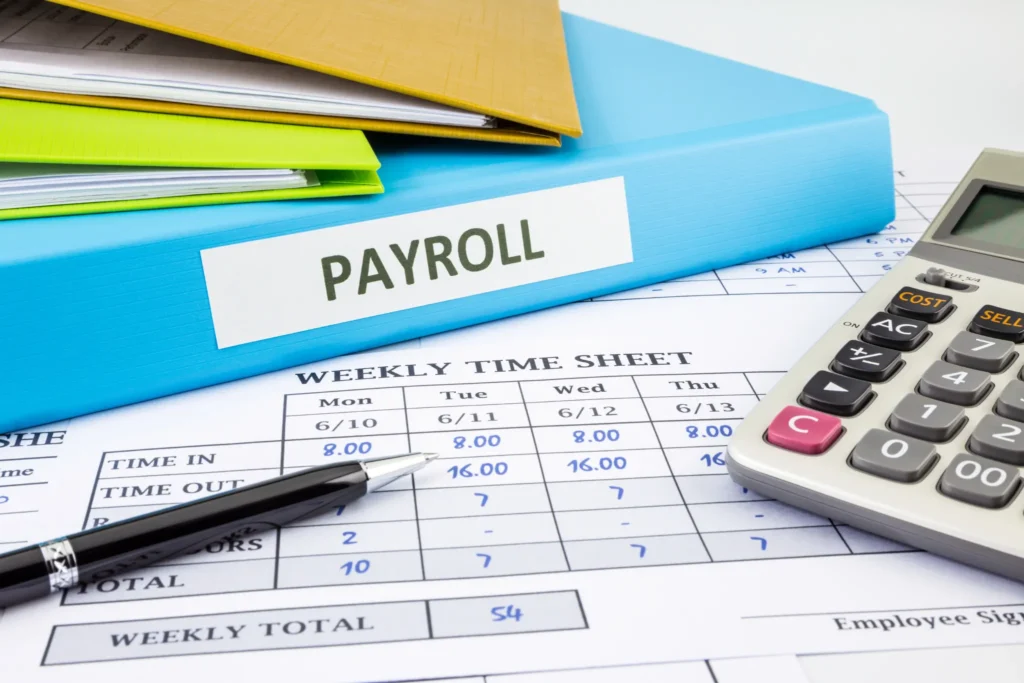


Ecommerce accounting in Thailand is mainly about making sure all revenue is properly captured. Payments from platforms like Shopee, Lazada, and TikTok Shop often arrive after deductions for platform commissions, payment gateway charges, holdbacks, and cash-on-delivery adjustments. If your accounts only record the net amount received in the bank, your reported sales can end up 15% to 30% lower than the true figure.
Once annual turnover exceeds THB 1.8 million, the business must also register for 7% VAT. Ecommerce sellers should also be aware that online platforms now report seller income directly to the Revenue Department, which makes accurate and complete bookkeeping even more important.
Introduction
An E-commerce Accounting in Thailand usually does not run into trouble because of one major accounting error. More often, the problem is a series of small mistakes repeated month after month. That is why ecommerce accounting in Thailand is not just ordinary bookkeeping with online sales added on top.
The bank account may show a clean deposit from Shopee or Lazada, but the seller dashboard shows a higher number. If no one reconciles the two, the accounts stop reflecting reality.
For example, if a marketplace pays out THB 720,000 against THB 1,000,000 in actual customer orders, the missing THB 280,000 is not lost income. It is usually deductions made by the platform for things such as commission, transaction fees, advertising costs, and withholding amounts deducted before payment is released. If a bookkeeper records only the THB 720,000 received as revenue, the accounts will understate both sales and deductible expenses. From there, the VAT calculation may be wrong, the corporate income tax return may be based on the wrong numbers, and the business can quickly fall out of line with its actual position.
This is why ecommerce accounting in Thailand is a specialist area. The amount that reaches your bank account is often not the same as the revenue your business has earned.
Points clés
- Platforms such as Lazada and Shopee pay you net, but the Thai Revenue Department taxes you gross. The difference usually comes from commission charges, advertising fees, and withholding amounts. These should be recorded as business expenses, rather than simply deducted from sales and ignored.
- VAT registration is mandatory once annual turnover exceeds THB 1.8 million, and the rate is 7%
- Since the 1st of January 2024, electronic platforms must report each seller’s revenue to the Revenue Department within 150 days of year-end, so under-declared online sales are now easy to detect.
- Foreign digital platforms and sellers earning over THB 1.8 million from Thai consumers must register under the VAT for Electronic Service (VES) system and remit 7% VAT.
- In our experience the single biggest error in ecommerce books is treating the bank settlement as the sale. Reconcile to the platform statement, not the bank line.
- Cross-border advertising paid to Google and Meta triggers reverse-charge VAT on form PP36, a liability most sellers never file.
Why E-commerce Accounting Is Different
In Thailand, the E-commerce Accounting revenue is recognised when the sale is made and the goods pass to the buyer, not when Lazada, Shopee, TikTok Shop, or another platform sends the payout. Between the sale and the final settlement, there can be platform fees, advertising charges, withholding amounts, returns, refunds, and timing differences, and each of those needs to be recorded properly in the accounts.
For a traditional retailer, the process is straightforward: a sale is made, payment is received, and the cash is often deposited the same day. For an online seller, the timeline is different. A product may be sold on Monday, shipped on Tuesday, confirmed by the customer on Friday, and only paid out by the platform the following Wednesday after various deductions have been taken off.
That means a single THB 1,000 sale may affect several parts of the accounts before the money ever reaches the bank. Depending on the platform and the transaction, it may need to be recorded as revenue, a receivable from the marketplace, a commission expense, advertising or fulfillment costs, VAT, and in some cases a reserve for returns or refunds.
What is even more important for e-commerce business owners to understand is that platforms like Lazada, Shopee, TikTok Shop, Shopify, LINE Shopping, and even social channels such as Facebook Marketplace each have their own fee structure, settlement cycle, and reporting format, and the accounting challenge becomes much larger.
Ecommerce accounting is often not just recording the bank receipt, it is reconciling gross sales back from net platform payouts and making sure every fee, tax, and deduction is recorded in the right place.
That is also why generic bookkeeping often falls short for online sellers. It is usually designed around recording money in and money out of the bank. Ecommerce businesses need something more detailed: a system that can rebuild gross revenue from net deposits across multiple sales channels and keep the books aligned with what the platforms are actually reporting.

How do you Reconcile Marketplace Settlements?
Marketplace settlement reconciliation means rebuilding gross sales from the platform statement, then matching the net payout to the amount received in your bank account. In practice, that means starting with the platform’s gross order value and then identifying every deduction that sits between the sale and the cash deposit: commission, payment fees, shipping subsidies, seller-funded promotions, refunds, returns, advertising recoveries, and any other platform withholding. If the numbers do not bridge back to the deposit, something is missing.
Take a TikTok Shop payout of THB 184,000. The seller statement might show THB 250,000 of gross orders, less a 6% commission of THB 15,000, a 2% payment fee of THB 5,000, THB 31,000 of returns or refunds processed in the period, and THB 15,000 of advertising recovered by the platform. The payout of THB 184,000 is the result of those deductions. If you record only the bank deposit, your books miss both the true sales figure and the cost lines sitting behind it.
A simple settlement bridge
| Line | Amount (THB) |
| Gross order value | 250,000 |
| Less commission (6%) | (15,000) |
| Less payment fee (2%) | (5,000) |
| Less returns/refunds processed in the period | (31,000) |
| Less platform ad recovery | (15,000) |
| Net payout to bank | 184,000 |
That bridge explains how the platform arrived at the cash deposit. It does not mean every deduction is treated the same way in the accounts.
This is where many ecommerce books go wrong. Commission, payment fees, and platform ad recoveries are generally recorded as separate expense lines. Returns and refunds are different.
If THB 31,000 relates to returned or refunded orders, that amount should usually be recorded as a reduction of sales, with the related output VAT reversed or adjusted where required. It should not sit only as a deduction inside the payout bridge while the full THB 250,000 remains recognised as final revenue.
Using the same example, the accounting view would normally look more like this:
Accounting view of the same settlement
| Item | Amount (THB) |
| Gross sales | 250,000 |
| Less sales returns/refunds | (31,000) |
| Net sales recognised | 219,000 |
| Commission expense | 15,000 |
| Payment fee expense | 5,000 |
| Advertising/platform marketing expense | 15,000 |
So the key point is, revenue is not the THB 184,000 bank deposit. But it is also not automatically the full THB 250,000 if part of that amount was refunded or returned in the same reporting period. The deposit must be unpacked into its components so that sales, returns, fees, and platform recoveries each go to the correct ledger account.
Each platform reports differently. Shopee often splits commission and service fees into separate lines. Lazada may bundle marketplace fees and payment charges together. TikTok Shop commonly recovers ad spend inside the settlement itself rather than billing it separately. A proper ecommerce ledger maps each line to a named account and applies the correct tax treatment, so the profit and loss shows real gross sales, real returns, and real selling costs rather than a single net figure that no bank statement or auditor can verify.
That is why marketplace reconciliation is not just simple bookkeeping admin. Our bookkeeping services for companies in Thailand are built around that reconciliation, so marketplace sales are recorded properly from the start instead of being reconstructed months later.
Can a Foreign-Owned Company Run an E-commerce Business in Thailand?
Before looking at the accounting side, it is important to make sure the business is structured correctly. Selling goods online to consumers in Thailand is generally treated as retail trade, while operating an online marketplace is a regulated service. Both activities fall under the Foreign Business Act.
A Thai company with 50% or more foreign shareholding is treated as a foreign company under the Act. As a general rule, it will need a Foreign Business License before carrying on these activities.
In practice, a Foreign Business License for online retail or platform services is difficult to obtain. The retail exemption requires at least THB 100 million of paid-up capital per platform, and even then it does not extend to operating a marketplace for third-party sellers. For that reason, most foreign entrepreneurs run their online business through a Thai-majority company with a genuine Thai partner rather than applying for a license. Marketplace activity in particular is, in practice, reserved for Thai-majority companies.
The Board of Investment used to offer a way around this. For several years the BOI promoted e-commerce as a category, which could grant majority or full foreign ownership. The BOI discontinued the standalone e-commerce promotion in 2021 and folded it into a digital platform and digital content category with tighter conditions. Companies that already hold an e-commerce promotion keep it, but new e-commerce promotions are no longer granted. BOI applications are one of our main areas of work, and this is one of the first points we check before a client commits to a structure.
There is also a separate registration that is easy to miss. Since 21 August 2023, the Royal Decree on Digital Platform Service Businesses has required operators of digital platforms that connect users in Thailand to notify the Electronic Transactions Development Agency (ETDA).
Operators with more than THB 50 million of annual revenue, or more than 5,000 monthly active users in Thailand, file the full notification; smaller operators file a short form, and operators based outside Thailand must appoint a local coordinator. A company that only sells its own products on Lazada, Shopee, TikTok Shop, or through Facebook and LINE is a user of those platforms, not an operator, and does not need to notify ETDA. A company building its own marketplace or app does.
Whichever route applies, once the company is trading the accounting and tax obligations are the same, and they are where most of the day-to-day risk sits.
What Tax Obligations Apply to E-commerce Businesses in Thailand?
For most online businesses, ecommerce accounting means actively managing transactions across multiple platforms. Whether you sell through Lazada, Shopee, TikTok Shop, social channels such as Facebook or LINE, or your own Shopify store, the business remains subject to corporate income tax, VAT, and, where relevant, withholding tax on payments made to service providers.
One of the most common mistakes ecommerce businesses make is assuming that, because the marketplace collects payment, deducts its fees, and sends a net payout, most of the accounting work has already been taken care of. However, this is not the case and businesses are still required to comply with the usual rules on corporate income tax, monthly VAT filings, or withholding tax on services purchased in Thailand.
Good ecommerce accounting in Thailand means clearly separating what the platform handles from what the company remains responsible for, and making sure both sides are dealt with properly.
How Does VAT Work When Selling on Lazada, Shopee, or TikTok Shop?
A business must register for VAT once annual turnover exceeds THB 1.8 million, and the rate is 7% until 30 September 2026 (Revenue Department). For an online seller, turnover means gross sales across all channels, so combining Lazada, Shopee, a website store, and social-commerce sales on Facebook, LINE or TikTok can push you over the threshold faster than you expect.
Output VAT is charged on the gross sale price, not the net payout. A THB 1,070 sale (VAT-inclusive) contains THB 70 of output VAT the seller must remit on the monthly PP30 return, regardless of how much the platform deducts before paying. Sellers who calculate VAT based on the net deposit rather than the full sale value can end up systematically underpaying VAT and building up a liability that may only become known during an audit.
Input VAT on Thai supplier invoices, packaging, software and local services is recoverable, which is why keeping every tax invoice matters.
Voluntary VAT registration is available even below the THB 1.8 million threshold and can often make commercial sense, as it allows the business to recover input VAT on costs such as inventory, fulfilment, and software subscriptions.
Lire plus :
VAT registration in Thailand and when to register.
Comment le taux de TVA en Thaïlande affecte-t-il vos activités commerciales ?
Does Selling on Lazada or Shopee Require VAT Registration in Thailand?
VAT registration becomes mandatory once annual taxable turnover exceeds THB 1.8 million.
That threshold applies to the company’s total revenue, not just sales from one platform, so income from Lazada, Shopee, TikTok Shop, and the company’s own website must be looked at together.
Companies that sponsor work permits for foreign directors or staff need to be VAT registered, regardless of turnover, because registration is part of the supporting paperwork the authorities expect for work permits and visas.
The foreign e-service VAT (VES) regime
Thailand taxes digital services supplied to Thai consumers by non-resident providers. A foreign platform or seller earning more than THB 1.8 million per year from non-VAT-registered customers in Thailand must register under the VAT for Electronic Service (VES) system and remit 7% VAT, a rule in force since 1 September 2021 (Revenue Department).
For marketplace operators, the platform itself often remits VAT on behalf of the sellers it hosts, which changes what the seller sees in settlement. A foreign-owned business selling through a non-resident platform needs to know whether VAT has already been collected upstream, because double-counting it locally is a common and expensive mistake.
If your Thai company buys foreign digital services such as advertising, SaaS, or cloud hosting, it may need to account for reverse-charge VAT on form PP.36 as the recipient of an imported service. It is one of the most commonly missed filings in ecommerce.
If you are reviewing your current setup, VB & Partners can carry out a confidential review of your ecommerce accounting and tell you clearly whether revenue is being recorded properly and VAT is being handled correctly.
We can review the books as your external auditor and sign off the year-end accounts, or step in during the year if you want to move the bookkeeping over to us. If your current setup is not working, you do not need to wait until year-end to make a change.
Imported stock, import VAT and landed cost
When an ecommerce business imports stock, the true cost of an item is its landed cost: the supplier price plus freight, insurance, customs duty and import VAT, divided across the units received. Recording only the supplier invoice understates inventory value and overstates margin, which distorts every pricing and tax decision that follows.
Import VAT at 7% is paid when the goods enter Thailand and is calculated on the CIF value plus any customs duty, not just the supplier’s invoice price. That VAT can usually be claimed back as input VAT in the company’s PP.30 return, provided the import entry and supporting documents are in the company’s name.
Customs duty, by contrast, is a real cost of bringing the goods into the business and should be included in inventory rather than booked as a recoverable tax or a separate operating expense. Mixing duty and import VAT is a common mistake, and it can either overstate the VAT claim or leave part of the inventory cost sitting in the wrong place.
How Does Marketplace Withholding Tax Affect Online Sellers in Thailand?
Thailand’s withholding tax rules require businesses to deduct tax at source when paying for certain services and pay it to the Revenue Department. For ecommerce sellers, that usually comes up when paying Thai service providers such as photographers, marketing agencies, couriers, or warehouse operators.
For service fees, the most common rate is 3%, with PND.53 used for payments to companies and PND.3 for payments to individuals. The return is due by the 7th of the following month, or by the 15th if filed online, and the payer must also issue a withholding tax certificate (form Kor. 50 Jor. / WHT certificate) to the supplier.
Overseas advertising spending also requires careful consideration. Payments to platforms such as Google or Meta are not treated in the same way as payments to Thai suppliers, and the withholding tax position depends on the nature of the payment and the relevant tax treaty.
It is also worth being clear about what the platforms do not do. Lazada and Shopee do not withhold tax from seller payouts in a way that replaces the seller’s own tax obligations. The seller still needs to report the income properly and keep the platform reports and payout records to support the numbers in the accounts.
Do Lazada or Shopee Withhold Tax From Seller Payouts in Thailand?
In Thailand, platforms such as Lazada and Shopee do not currently withhold tax from seller payouts in the way some other countries have started to require. The seller usually receives the payout after platform fees and commissions, but the tax reporting still sits with the seller’s company.
That is the part some businesses miss. The fact that the money comes through a marketplace does not mean the tax has been dealt with. The company still needs to report the revenue properly, account for VAT where applicable, and keep the platform reports and payout statements to support the figures in its books.
It is also worth keeping in mind that platform data can be shared with the Revenue Department. If sales are missing from the accounts, it is not difficult for that gap to surface later.
Inventory, 3PL and cash-on-delivery
Online sellers rarely keep all of their inventory in one place. Stock may be split between their own warehouse, a marketplace fulfilment centre, and a third-party logistics (3PL) provider. Your accounts need to clearly reflect this. If inventory isn’t properly tracked, it becomes difficult to value accurately, reconcile stock levels, or even confirm that you have the right insurance cover.
Cash-on-delivery (COD) creates another accounting challenge. The courier collects payment from the customer, deducts its fees, and transfers the remaining balance later. Until that money reaches your bank account, it is a receivable from the courier rather than cash in the business.
It is not unusual for an e-commerce business with THB 300,000 in monthly COD sales to have tens of thousands of baht sitting with couriers at month-end. Without regular reconciliations, those balances can easily be overlooked.
The solution for managing this is actually very straightforward. Each inventory location and each COD courier should have its own control account, reconciled every month. When these balances are monitored consistently, your financial records accurately reflect the inventory you own and the cash you are still owed.
How Should You Structure Monthly E-commerce Bookkeeping in Thailand?
Accounting for an e-commerce business follows the same principles as accounting for any other company in Thailand. The books are kept on the standard chart of accounts, closed every month, and used to file VAT, withholding tax, and corporate income tax on the usual deadlines. There is no special e-commerce accounting regime.
The most significant difference is the volume of transactions. A retail or service business might post a few dozen transactions a month, while an active online seller can generate thousands, each carrying its own commission, fee, and tax treatment.
Recording each transaction properly can take a significant amount of time and effort. For that reason, we don’t bill these clients per transaction. Instead, we build tailored packages sized to the volume of transactions, so the cost stays reasonable for the client while still reflecting the real work involved.
Proper e-commerce bookkeeping involves much more than matching your bank balance at the end of the month. Every sale, fee, refund, and platform payout needs to be recorded correctly so that your accounts reflect what has actually happened.
The monthly bookkeeping process starts by collecting data from every sales channel and service provider. This usually includes marketplace payout statements, platform fee invoices, shipping invoices, returns and refund reports, advertising costs, and bank transactions. Properly collecting and compiling these allows your accountant to reconcile sales, expenses, and cash received.
Timing is equally important. Revenue should generally be recognised when the order has been delivered and control of the goods passes to the customer, not when the order is placed. This also affects when VAT output tax becomes payable, making accurate timing essential for compliant tax reporting.
Platform commissions, payment processing charges, and other marketplace fees are usually deductible business expenses. To support these deductions, they should be supported by the appropriate tax invoice or receipt issued by the platform and recorded correctly in your accounting records.
In practice, getting a valid tax invoice for every deduction is one of the harder parts of e-commerce bookkeeping. Commission and payment fees are usually documented by the platform’s own tax invoice or monthly statement. Smaller costs, especially low-value delivery charges and incidental fees, often arrive without a proper tax invoice, and without one the expense is not deductible for corporate income tax and the input VAT cannot be claimed. It also helps to be clear about who issues what. For the sale of your own product, your company issues its own tax invoice to the customer. The delivery and platform-fee side is normally invoiced directly by the platform or courier, so those documents have to be collected from them rather than produced by you.
What Records Do I Need to Keep as an Online Seller in Thailand?
Thai accounting standards require companies to retain their accounting records and supporting documents for at least five years. Keeping complete and well-organised records makes tax filings, audits, and financial reporting much easier.
For most e-commerce businesses, this includes payout statements from each marketplace, VAT tax invoices issued to customers and received from suppliers, bank statements, inventory records for physical goods, and customs documentation for imported stock where applicable.
If your business is VAT registered, you will also need to issue e-Tax invoices for taxable sales. Many online sellers configure this through their accounting software so invoices are generated automatically as part of the sales process.
Cloud accounting platforms such as FlowAccount and Xero can simplify day-to-day bookkeeping by giving both directors and accountants real-time access to financial information. They also make it easier to prepare VAT returns, monitor cash flow, and keep records organised as the business grows.
Learn more about how our accounting team supports e-commerce businesses on our Accounting Services page.
Which Accounting Software Should I Use for E-commerce in Thailand?
There is no single best option. The right software depends on how many transactions you process and how complex your setup is. For e-commerce, the most important consideration is handling high transaction volumes and reconciling sales back to platform statements, while still producing the Thai filings you need, such as the PP30 VAT return and withholding tax forms.
FlowAccount is a popular choice in Thailand and connects directly to Lazada and Shopee, with e-Tax invoice and VAT support. It suits sellers whose transaction volumes are still moderate. SMEMove is another Thai option built around local tax compliance, and it is one we use regularly.
For larger or multi-currency operations, Xero offers stronger reporting and a wide range of add-ons, including ThaiTax for VAT and withholding tax. QuickBooks is workable but its Thai compliance support is thinner, so it tends to fit smaller setups. Businesses that need stock, fulfillment and accounting in one system sometimes move to an ERP such as Odoo.
Our accountants can recommend the right software for your volume and then run your bookkeeping inside it. Whichever platform you choose, the important point is that you keep ownership of the software and the data it holds. That way, if you ever decide to change your accounting firm, all of your records stay with you.
Questions Fréquemment Posées
Do I Need to Register for VAT if I Sell on Lazada in Thailand?
Yes. If your company’s annual taxable turnover exceeds THB 1.8 million, VAT registration becomes mandatory. The threshold applies to your total revenue across all sales channels, including Lazada, Shopee, your own website, social commerce, and any other platforms.
Registration must be completed within 30 days of exceeding the threshold. Businesses below the threshold can also register voluntarily, which may be worthwhile if you want to recover input VAT on eligible business expenses.
How Does Withholding Tax Work for Shopee and Lazada Sellers in Thailand?
Shopee and Lazada do not currently withhold tax from payouts made to domestic sellers. Instead, your business receives the sales proceeds after platform fees have been deducted.
Your withholding tax obligations arise when you pay certain service providers, such as photographers, marketing agencies, freelancers, or logistics companies. In those cases, your company may need to withhold tax and remit it to the Revenue Department using the appropriate forms by the 7th of the following month.
What Taxes Does a Foreign-Owned E-commerce Company Pay in Thailand?
A foreign-owned Thai Limited Company follows the same tax rules as any other Thai company. It pays corporate income tax on its net profits, registers for VAT once required, and manages any withholding tax obligations when paying suppliers or service providers.
There is no separate e-commerce tax in Thailand. Revenue from every sales channel is combined when calculating both corporate income tax and VAT.
How Do I Account for Marketplace Fees and Commissions?
Marketplace commissions charged by platforms such as Lazada, Shopee, and TikTok Shop are normally deductible business expenses. They should be recorded using the fee statements or tax invoices provided by the platform.
Advertising costs, payment processing fees, and other platform charges should also be recognised in the same accounting period as the related sales. Recording these expenses monthly helps ensure your financial reports accurately reflect your business performance.
What Happens if I Don’t Declare My Lazada Income in Thailand?
The Revenue Department has significantly expanded its use of digital data, including information obtained from major online platforms. As a result, undeclared income is becoming much easier to identify.
If tax has not been declared correctly, businesses may face late filing penalties, interest, and additional tax assessments. Depending on the circumstances, the authorities may also review previous tax years, making accurate bookkeeping and timely filings increasingly important.
How Does the 2026 Import Duty Change Affect My E-commerce Business?
From 1 January 2026, all imported goods are subject to customs duty and VAT from the first baht. The previous THB 1,500 low-value import exemption no longer applies.
If your business imports inventory, these additional costs should be reflected in your accounting records. For VAT-registered companies, import VAT can generally be recovered as input VAT, subject to the normal rules.
Can I Claim Input VAT on Costs Related to My Shopee Store?
Yes, provided your business is VAT registered and the expense qualifies for input VAT recovery.
This can include inventory purchases, eligible platform fees supported by tax invoices, advertising costs, fulfillment services, software subscriptions, and other business expenses. The recoverable input VAT is offset against the VAT you collect from customers, helping reduce your overall VAT liability.
What Accounting Records Should an Online Seller Keep in Thailand?
Thai companies are generally required to keep accounting records and supporting documents for at least five years.
This should include marketplace payout statements, tax invoices issued and received, bank statements, inventory records, customs documents for imported goods, and payroll records if you employ staff.
Using cloud accounting software makes this much easier. It provides a clear audit trail, keeps your records organised, and allows both your accountant and management team to access up-to-date financial information whenever it’s needed.
Get Expert E-commerce Accounting Support from VB & Partners
Running an e-commerce business through a Thai Limited Company means managing several tax obligations at the same time. Corporate income tax, VAT, and withholding tax all need to be handled correctly, while sales from every platform must be accurately reconciled. With the Revenue Department making greater use of marketplace data from platforms such as Lazada and Shopee, strong accounting processes are no longer something to put off until later.
VB & Partners supports foreign-owned businesses across Thailand with monthly accounting, tax compliance, and financial reporting, including businesses selling through online marketplaces.
Our company is licensed by the Federation of Accounting Professions, and our accountants keep their CPD up to date. We work on cloud accounting software, either by setting one up when you are not sure which to choose, or by working in the software you already use. We are familiar with FlowAccount, SMEMove, QuickBooks, Xero and, in practice, almost any platform a client runs, and our team adapts to it. The service is available in Thai, English or French. Monthly accounting packages start from THB 6,500.
We can support your business in two ways. If you’re happy with your existing bookkeeper but want an independent review, we can act as your external auditor and prepare and sign off the annual financial statements filed with the Department of Business Development (DBD).
Alternatively, we can take over your bookkeeping and manage your accounting, tax filings and payroll throughout the year. You don’t need to wait until year-end to change accounting providers, and if you’re unsure which option is right for you, a short review will quickly show where your accounts stand.
If you’re looking for reliable accounting support for your e-commerce business, we’d be happy to help. Contact VB & Partners by WhatsApp or email for more information.
Clause de non-responsabilité
Veuillez noter que cet article est fourni à titre d'information uniquement et ne constitue pas un conseil juridique ou fiscal.