


TL;DR Thailand residence by investment isn’t as simple as making an investment and receiving long-term residence. Different options, such as LTR visas, business-based structures, BOI projects, and the Thailand Elite Visa, all come with their own rules and requirements. Most issues appear later, during tax filings and visa renewals, when things were not set up properly from the start.
Introduction
Many investors assume that Thailand residence by investment is a simple process: make a financial commitment, submit an application, and receive long-term residence. In practice, Thailand offers residence through several different pathways, each with its own requirements and limitations. The eligibility requirements for some options, such as the LTR Visa, are primarily based on meeting specific financial and income criteria, while others such as starting a business in Thailand involve additional considerations beyond the initial investment.
Decisions around visa eligibility, whether to start a business, income sources, company structures, and tax residency status are closely connected. Without careful consideration and planning, issues or complications may emerge later, typically during tax filings, visa renewals, or corporate compliance reviews.
When structured correctly, Thailand residence by investment can provide long-term stability, flexibility, and planning clarity. When approached casually, it can expose investors to delays, regulatory risk, and potential loss of residence status.
Key Points
- Residence by investment relies on proper business, tax and compliance structuring
- Immigration, accounting and tax obligations are closely linked
- Errors often appear after approval, during renewals or audits
- Professional guidance significantly reduces risk and protects long-term residence
What “Residence by Investment” Really Means in Thailand
When people first hear about Thailand residence by investment, they often assume it operates in the same way as programs in other countries, where a defined capital threshold leads directly to long-term residence. While this is possible through the Long Term Residency Visa and the Thailand Visa Elite, Thailand does offer alternatives such as obtaining a visa and work permit through starting a business.
Residence in Thailand can be achieved through a combination of legal, financial and/or corporate steps, each of which must independently meet regulatory requirements and collectively demonstrate economic substance.
How Thailand Approaches Residence Through Investment
Thai residence by investment is not assessed on the presence of capital alone. While some pathways, such as the LTR categories for Wealthy Global Citizens and Wealthy Pensioners, are primarily based on meeting strict financial and/or income thresholds, others require a broader review of how the investment or activity is structured.
Depending on the route chosen, authorities may consider factors such as the source of funds, the purpose of the investment, compliance with visa conditions, and, where a business is involved, ongoing corporate, accounting, and tax obligations.
Simply holding funds in a Thai bank or making an unstructured investment will not, on its own, support most long-term residence options. At VB & Partners our experts are available to provide advice and guidance about which residency by investment option is best suited to you. For more information, why not book a call with our team.
The Long Term Residency Visa (LTR)
The Long-Term Resident (LTR) Visa is a Thai government programme designed to attract financially established individuals, professionals, and investors to live and/or work in Thailand on a long-term basis.
The Long-Term Resident (LTR) Visa provides a structured way for eligible foreigners to live in Thailand long term. Instead of relying on short-term visa renewals, the programme sets clear requirements around income, assets and residency.
Rather than focusing on frequent extensions or informal arrangements, the LTR Visa is designed for individuals who can demonstrate financial standing, ongoing income, and a genuine long-term presence in Thailand.
The key features of the LTR Visa include:
- 10-year visa (issued as 5 years + 5-year extension)
- Exemption of income tax on foreign sourced income remitted to Thailand
- Exemption from 90-day reporting (annual reporting only)
- No re-entry permit required
- Eligibility to dependents
- Availability of a work permit and exemption from the 4:1 Thai-to-foreigner employment ratio
- Fast-track immigration services at major international airports
To be eligible for Thailand residency by investment under the Wealthy Global Citizens or Wealthy Pensioner LTR visa categories, applicants must be able to satisfy the following criteria:
Wealthy Global Citizens applicants must meet one of the following criteria:
- Invest USD 500,000 in Thai property, Thai government bonds, or approved foreign direct investment; or
- hold USD 1 million in total assets (including the USD 500,000 investment in Thailand).
Wealthy Pensioners applicants must either:
- Receive passive income of USD 80,000 or more. Or;
- Invest USD 250,000 in Thai property or government bonds and receive an annual passive income of at least USD 40,000.
It is important to note that passive income includes pensions, dividends and rental income.
Starting and Running a Business in Thailand
If an applicant is not eligible for an LTR visa, Thailand offers several alternative residence through investment options. Eligible options are usually built around one of the following:
Starting a Business
Some investors establish or invest in a Thai company and obtain residence through a business visa and work permit framework. This involves registered capital, undertaking permitted business activities, director appointments, and compliance with Thai corporate, accounting, and tax rules.
BOI-supported Projects
Certain investors qualify through Board of Investment promoted companies. These structures can allow 100 percent foreign ownership, more flexible employment rules and tax benefits such as corporate income tax exemptions for a fixed period.
While the BOI does offer significant advantages, it is only available to eligible projects. The BOI has a reputation of only being available to large or technologically advanced projects, but in reality many different types of businesses, including services may be eligible.
Read more:
Each structure has different implications for visa renewals, work rights, tax residency, and long-term compliance. Choosing the wrong structure, or combining elements inconsistently, often leads to problems during extensions, audits, or status reviews. This is why residence by investment in Thailand works best when immigration, tax, and corporate planning are considered together from the outset.
Thailand Elite Visa
The Thailand Elite Visa is not a traditional investment visa tied to business activity or capital deployment, it is commonly considered within residency-by-investment discussions due to its upfront membership cost and long-term residence benefits.
The Thailand Elite Visa is designed for individuals who wish to live in Thailand without engaging in local employment or business operations, offering a straightforward route to long-term stay through purchasing a membership.
Thailand Elite Visa Membership is available under different categories and offers the holder the ability to reside in Thailand for 5, 10, 15 or 20 years, depending on which level of membership they purchase.
Why Requirements Are Often Unclear
Immigration, corporate law and tax compliance are administered by different authorities. Rules change, interpretations vary and documentation requirements are not always published in one place. Without professional guidance, investors often misunderstand expectations or miss critical steps, leading to delays, penalties or rejection.

Why Thailand is an Attractive Residence by Investment Destination
Thailand is an attractive option for investors because of how its tax system treats foreign income. Newly introduced rules means Thailand does not automatically tax foreign-sourced income that is earned outside the country and not remitted into Thailand.
Under the new rules, Thai tax residents, individuals who stay in Thailand for 180 days or more in a calendar year, may benefit from a tax exemption on foreign income. To be eligible for the exemption, the income must have been earned overseas and remitted to Thailand within 12 months of the calendar year it was generated.
For those who qualify for the Long-Term Resident (LTR) Visa, the position can be even more favourable. Certain LTR categories, including Wealthy Pensioners and Wealthy Global Citizens, may benefit from an exemption on all foreign-sourced income remitted into Thailand. This makes the LTR Visa a particularly attractive option for individuals with overseas investments, pensions, or business income.
When combined with long-term residence stability, potential work rights, and clear eligibility criteria, Thailand offers an attractive residence by investment environment.
Where Most Applicants Go Wrong
Most problems arise after the initial setup, not before. Common mistakes include choosing a company structure that conflicts with foreign ownership rules, misunderstanding capital contribution requirements and timelines, treating accounting and tax compliance as an afterthought, relying on informal or outdated advice and failing to plan for long-term reporting obligations.
One frequent scenario involves investors discovering months later that their company is non-compliant with Thai accounting standards, VAT filings or corporate tax requirements.
These issues can trigger penalties, increased scrutiny or complications during visa renewal. Professional guidance ensures these risks are addressed from the outset.
The Legal and Regulatory Complexity Behind the Scenes
Thailand residence by investment can look straightforward at first glance, but in practice it is built on a detailed regulatory framework. Immigration approval is discretionary, and applications are reviewed not only on the amount invested, but also on how that investment is structured and whether the applicant’s financial and compliance history is consistent.
Approval is also not the end of the process. Most residence structures come with ongoing obligations, for example foreign nationals who spend 180 days or more in Thailand in a calendar year, tax residency will apply, bringing obligations to obtain a Thai tax identification number and file annual personal income tax returns, with potential exposure to double taxation or unexpected tax liabilities if income sources and filings are not structured correctly.
Where a company or business activity is involved, additional layers apply. Thai corporate rules around shareholding, directors, and permitted business activities must be followed carefully. A structure that seems acceptable at the start can raise issues later if it has not been set up correctly or maintained properly.
Businesses are also subject to mandatory requirements such as regular bookkeeping under Thai accounting standards, corporate income tax and VAT filings, withholding tax reporting, and annual financial statements or audits. Failure to do these could lead to significant financial penalties and delays or even rejection of visa renewals.
Problems in these areas often only come to light later on, for example during visa renewals or regulatory reviews, which is why early planning and ongoing compliance are just as important as the initial application.
Why Professional Guidance Makes a Measurable Difference
Thailand residence by investment requires coordination and preparation. Professional guidance helps structure investments correctly from day one, align immigration, corporate, accounting and tax requirements, identify risks before authorities do, keep timelines realistic and predictable and protect long-term residence and financial position.
How VB & Partners Supports Residence by Investment Projects
VB & Partners specialises in accounting, tax and compliance services for businesses operating in Thailand, with a strong focus on long-term viability. Support typically includes advising on compliant business and investment structures, setting up accounting systems from day one, managing monthly bookkeeping and reporting, handling tax filings, VAT and withholding tax, preparing financial statements and coordinating audits and supporting BOI structures and PEO solutions where applicable. Using cloud-based platforms such as Xero and FlowAccount, clients gain transparency, control and confidence in their compliance position.
Examples of Ongoing Residency Requirements Compliance in Practice
Ongoing compliance is an important consideration for anyone considering residence by investment in Thailand, and in practice this often involves demonstrating that income and investments are genuine, can be proven, and properly declared. The type of documentation required depends on the nature of the income and the residence pathway used.
For passive income, such as pensions or investment income, the relevant authorities may request official tax declarations from the country where the income is generated or where the applicant is a tax resident. This allows them to verify that the income has been properly reported. Examples of the documents that may be required include annual tax returns, pension statements, or official tax assessments issued by a foreign tax authority.
An example of the type of document required can be seen here:
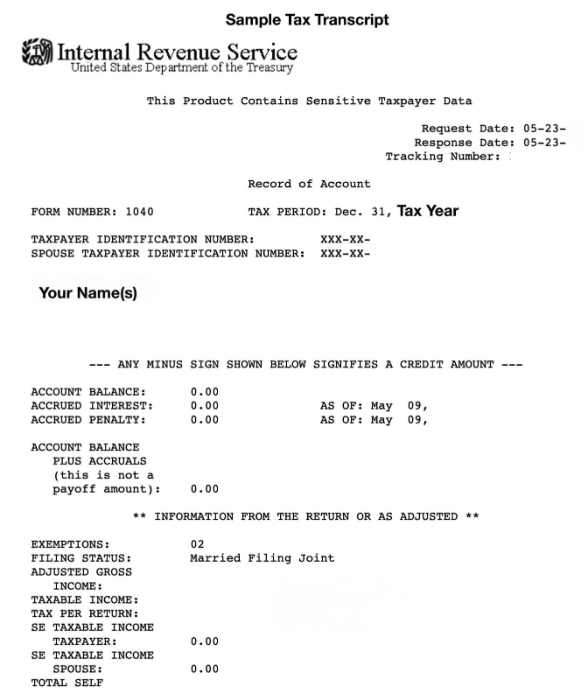
For dividend income, reviews are usually more detailed. Authorities may request a wide variety of supporting documents such as audited financial statements, board of directors’ resolutions approving the dividend, and bank records showing the actual payment of funds. These documents are assessed together to confirm that the dividend is legitimate and correctly paid.
For rental or real estate income, compliance checks may include the lease agreement, evidence of ownership, proof that the income has been declared in the relevant jurisdiction, and bank statements showing where the rental income was received.
Marital status is another important area that can affect how investment amounts or income are assessed, and documents issued in languages other than English may need to be officially translated or certified to be accepted in Thailand.
These details can easily be overlooked, but in practice they often have a direct impact on application reviews and renewals. Taking a structured approach, supported by professional advice, helps reduce risk and avoid unnecessary delays and support long-term residence stability.
Our Thoughts
In our experience, the strongest outcomes come when investors treat residence as a long-term plan rather than a one-off application.
Long-term immigration stability depends on how well corporate governance, accounting practices, and tax obligations are handled year after year. Most of the problems we see are usually small issues that build over time, such as missed filings, unclear ownership arrangements, or inconsistent reporting. These are far easier to prevent at the planning stage than to correct later.
With the right guidance, residence by investment becomes a clear, well-structured, and sustainable pathway rather than something fragile or uncertain. If you are considering Thailand residence by investment and want clarity before moving forward, we invite you to speak with the team at VB & Partners for practical, tailored advice based on your circumstances.
Disclaimer
This information is provided for general informational purposes only and is not legal, tax, or financial advice.